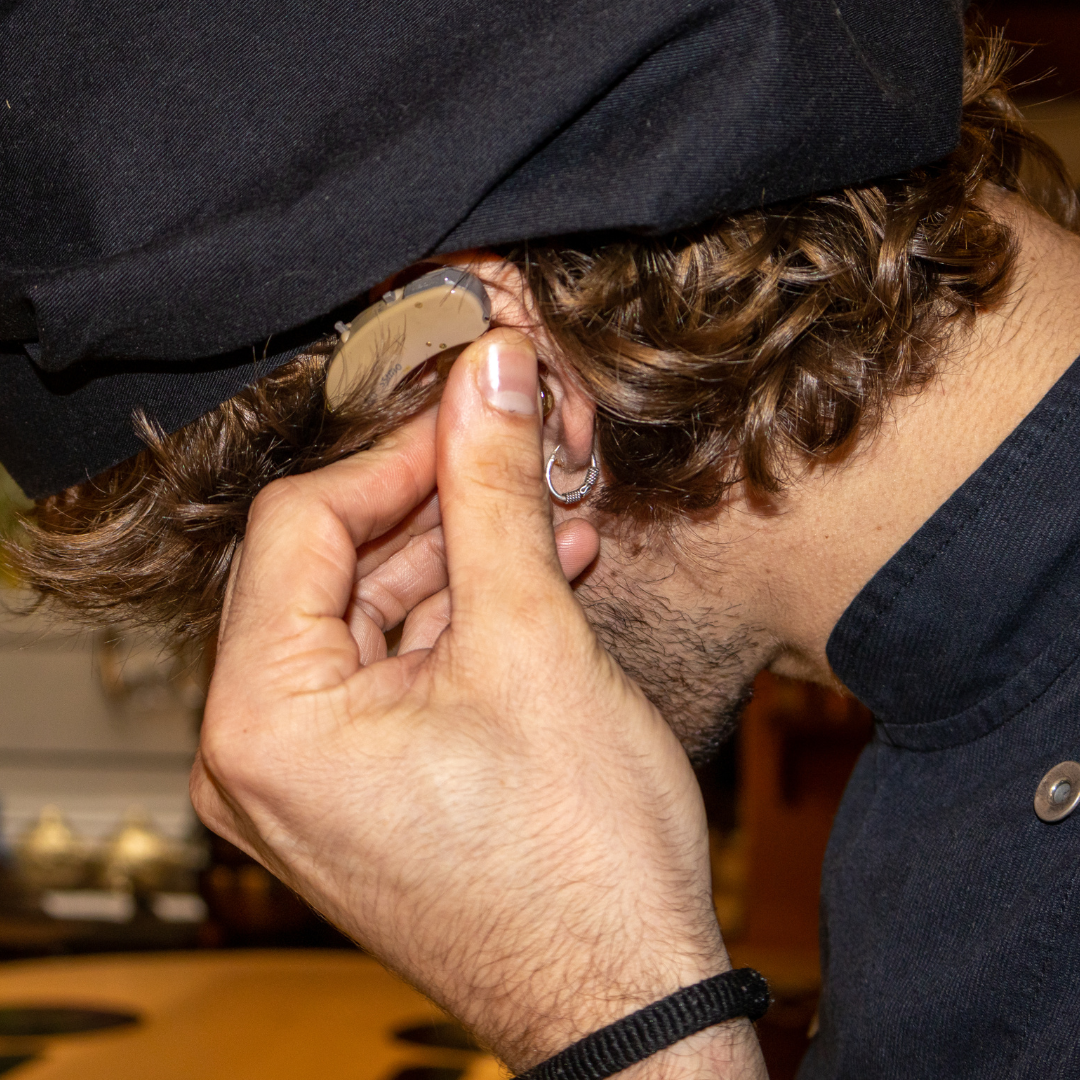
Active restaurant conversations are frequently hard to decipher when surrounding background noise clashes with your hearing. Our practice provides targeted diagnostics to evaluate hearing in quiet atmospheres as well as complex noise environments. Once the diagnostic etiology of your difficult hearing is established, we implement personalized clinical and technological strategies.
Why Can I Hear Normally but Struggle to Listen in a Restaurant?
In quiet conditions, an optimal signal-to-noise ratio ensures that the desired speaker sounds markedly clearer than surrounding sound. Commercial restaurant spaces present the polar opposite acoustic dynamic. Cross-talk, ambient music, dishware noise, and harsh acoustic reverberation interfere with speech clarity, forcing your brain to labor to extract the target voice.
These auditory struggles commonly accompany untreated high-frequency hearing loss, central processing delays, or presbycusis. Visual limitations from low lighting, cognitive fatigue, and sitting farther away from conversational partners amplify speech degradation. It is common to display normal baseline audibility on conventional hearing tests while failing comprehensive speech-in-noise testing. Disproportionate difficulty in restaurants justifies professional clinical assessment even if your everyday home hearing appears intact.
How Is High-Frequency Hearing Loss Diagnosed?
Our diagnostic process starts with a detailed case history reviewing problematic listening scenarios, occupational noise exposure, tinnitus, ototoxic medications, and familial genetics.
Pure-tone audiometric evaluations measure the absolute quietest sounds audible across specific octave frequencies using air and bone conduction. A clinical presentation of high-frequency loss produces a downward-sloping audiogram where auditory thresholds worsen significantly at higher frequencies. Diagnostic evaluations may also integrate acoustic tympanometry to check middle-ear pressure alongside word-recognition testing to evaluate speech processing.
Since sound-treated booths cannot replicate the chaos of a crowded dining room, speech-in-noise testing provides critical real-world insight. It calculates your ability to identify verbal phrases as competing background noise levels rise. Collectively, these evaluations clarify if your challenges relate to raw audibility, phonetic clarity, signal-to-noise processing, or compound factors.
How Auditory Processing Difficulties Impact Adult Hearing
An auditory processing disorder compromises how the central auditory pathways and brain decode incoming acoustic information. The physical ear mechanisms may capture tones correctly, but the central brain pathways struggle to filter competing inputs, parse similar consonants, or interpret rapid speech. We first evaluate peripheral hearing and then determine whether an individualized auditory-processing test battery or referrals to other professionals are appropriate.
Practical Strategies for Improving Speech Understanding in Noise
Minor environmental adjustments can boost speech acoustic signals and supply critical visual lip-reading cues. Before heading out to eat, select dining spots with quieter acoustic profiles or dine during low-volume hours. Dining locations utilizing sound-absorbing elements like booths, felt panels, window curtains, and carpet offer better acoustics than high-ceilinged rooms with hard surfaces.
Practical seating strategies in the dining room:
- Request a table away from the kitchen, bar, speakers, and large groups.
- Choose a seat with your back against a solid wall to block acoustic clutter originating from behind.
- Face your conversation partners in good lighting.
- Sit as close to the speaker as comfort permits to preserve speech volume and clarity.
- Direct your better-performing ear toward the companion you most need to understand.
- Instruct conversational partners to reword missed phrases instead of repeating the entire sentence verbatim.
- Verifiably confirm essential conversational facts instead of bluffing comprehension.
- Excuse yourself for a momentary quiet pause when listening exhaustion starts to mount.
- Request that friends speak with crisp clarity rather than speeding through dialogue.
- Elevated yelling distorts auditory signals and seldom improves actual phonetic comprehension.
What Are the Best Tools for Hearing with Background Noise?
Appropriate hearing technology is dictated by the precise diagnosis, primary listening environments, and the degree of diagnosed hearing loss. Professionally programmed hearing aids incorporate multi-channel directional microphones, digital noise reduction algorithms, and custom restaurant settings to capture frontal speech while attenuating background interference. Patients must uphold realistic expectations because modern amplification cannot strip out every ambient human voice completely.
Remote wireless microphones offer an exceptional boost to the signal-to-noise ratio in challenging venues. Clipped near the speaker’s mouth or set nearby, the transmitter sends voice signals wirelessly to matched hearing aids or a receiver. This targeted setup effectively neutralizes the negative impacts of room distance and interfering background noise.
Further practical hearing technology options include:
- Dedicated table microphones engineered to capture small-group dialogue
- Telecoil components connecting directly to public hearing-loop systems
- Smartphone live-captioning platforms providing instant speech-to-text visual support
- Earbuds or hearables with compatible assistive-listening features
- Acoustic sound-meter apps and dining review directories that score restaurant noise
Our audiology staff helps you evaluate options, ensures wireless compatibility, and trains you on operating your chosen equipment.
The Clinical Role of Audiologists in Managing Loud Environments
A thorough audiological evaluation expands the diagnostic scope well past simple quiet listening performance. We can review the places, speakers, and noise levels that cause problems and select tests that reflect those concerns. The assessment may include pure-tone thresholds, middle-ear testing, word recognition, and speech-in-noise measures. Auditory-processing testing may be considered when the history and initial results support it.
Any sudden, asymmetric, or rapidly deteriorating hearing loss demands immediate medical evaluation by an ear, nose, and throat physician. Dedicated individualized care pinpoints the underlying auditory cause rather than dismissing your struggles as standard restaurant noise.
Contact Us for a Hearing Evaluation Today
If crowded restaurant settings cause you to feel disconnected, tired, or forced to guess at conversations, arrange a diagnostic hearing evaluation today. Our clinical team will determine the best strategies to improve your hearing in noisy environments through custom hearing-aid programming, remote microphones, or targeted auditory rehabilitation.
Get in touch with our team to request an appointment and rediscover confident, stress-free restaurant conversations.